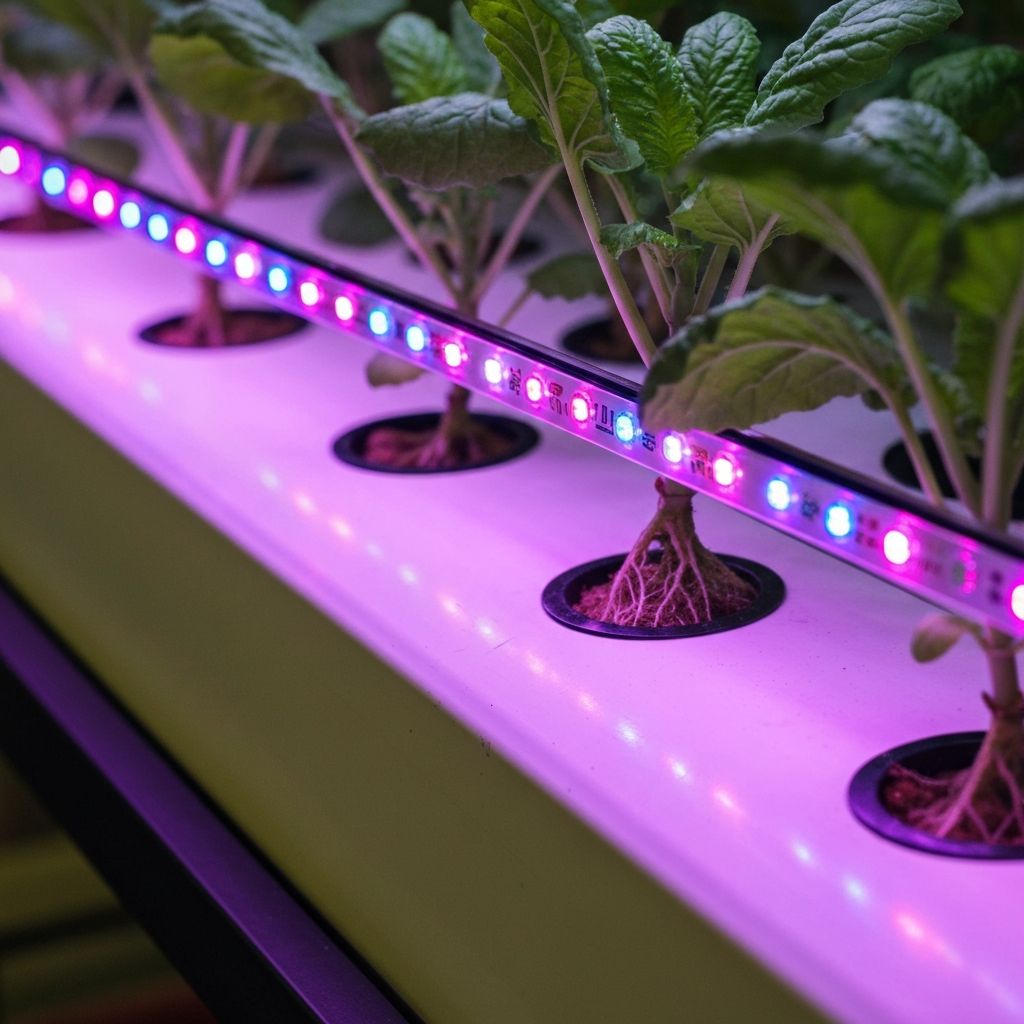
Why Light Spectrum Matters
Plants use different wavelengths of light for various biological processes. Understanding this allows you to optimize growth at each stage, from seedling to harvest.
The Color Spectrum Breakdown
- Blue (400-500nm): Promotes vegetative growth, compact plants, and strong stems
- Green (500-600nm): Penetrates canopy, helps with photosynthesis efficiency
- Red (600-700nm): Essential for flowering, fruiting, and overall plant development
- Far-Red (700-800nm): Triggers flowering response and can increase yields
- UV (280-400nm): Enhances flavor, aroma, and pest resistance in small doses
Seedling Stage (Weeks 1-2)
Use primarily blue light (60-70%) with reduced intensity (40-50% power). This encourages compact, sturdy growth and prevents leggy seedlings. Run lights for 16-18 hours daily.
Vegetative Stage (Weeks 3-6)
Increase to full intensity with balanced blue and red (roughly 50/50). This promotes rapid leaf growth and strong root development. Maintain 16-18 hours of light.
If plants are stretching too much, increase the blue ratio. If growth seems slow, add more red spectrum.
Flowering/Fruiting Stage
Shift to red-dominant light (60-70% red) to trigger and support flowering. Reduce light hours to 12-14 for flowering plants like tomatoes and peppers. Leafy greens can stay at 16+ hours.
Recommended Settings by Plant Type
- Leafy Greens: High blue, 16-18hr cycle, 75% intensity
- Herbs: Balanced spectrum, 14-16hr cycle, 80% intensity
- Tomatoes/Peppers: Red-heavy during fruit, 12-14hr, 100% intensity
- Microgreens: Blue-heavy, 12-16hr cycle, 50-60% intensity
Never look directly at grow lights, especially UV-enhanced models. Always wear appropriate eye protection when working near active lights.